 Professor Peter L. Dyson, Head of the Space Physics Research Group, La Trobe University, Bundoora,
Victoria.
Professor Peter L. Dyson, Head of the Space Physics Research Group, La Trobe University, Bundoora,
Victoria.|
NACAA PAPERS & POSTERS |
A major attraction at the NACAA are posters showing activities and observational results from many amateurs around Australia. It is not necessary to attend NACAA to have posters displayed.
Posters can be sent to the MPAS and will be posted on display boards.
Computers will be available to display electronic posters and electronic files can be sent to MPAS.
MS-PowerPoint is the preferred electronic format for posters. Electronic posters will be added to a menu driven program so people can select the posters they wish to view.
For those poster presenters who choose to attend the NACAA there will be an opportunity to talk about their poster at the working sessions and activity breaks.
PAPERS
KEYNOTE SPEAKER:
Professor Peter L. Dyson, Head of the Space Physics Research Group, La Trobe University, Bundoora,
Victoria.
Title: The Earths Environment in Space
Abstract: Earth does not orbit the Sun through empty space but through the tenuous solar wind. The Earth’s magnetic field shields us from this space environment, but only partially. Consequently the solar wind is still able to produce dramatic changes in our outer atmosphere and even at the Earth’s surface. Well known phenomena are the spectacular aurora and radio emissions often described as the “sounds of space”. This ever-changing geospace environment, which we now describe as space weather, impacts on all satellite technologies including GPS navigation and communication systems. It also directly affects radio astronomy observations and over-the-horizon radars such as the Australian Jindalee system. This presentation will describe aspects of the solar wind interaction with the Earth, some of the phenomena produced, and effects on modern technologies and radio astronomy techniques.
The La Trobe University Space Physics research group studies the interactions of the solar wind with Earth using: the Tasman International Geospace Environment Radar (TIGER) system that consists of two radars, one in Tasmania and one in New Zealand; optical spectrometers in Antarctica; and the Australian satellite FedSat. Our aim is to understand exactly how energy from the solar wind couples down into our atmosphere via the magnetosphere and ionosphere. We are particularly interested in mapping and studying atmospheric gravity waves, and cells and channels of rapid motion (~1 km/s and higher) that develop in the polar regions of the ionosphere and neutral atmosphere in response to changing solar wind conditions. A brief overview of the techniques used and some illustrative results will be presented.
AFTER DINNER SPEAKER:
 Dr Duncan Steel, Principal Research Scientist -
Space Systems, Ball Solutions Group, Canberra, and Australian Centre for
Astrobiology, Macquarie University.
Dr Duncan Steel, Principal Research Scientist -
Space Systems, Ball Solutions Group, Canberra, and Australian Centre for
Astrobiology, Macquarie University.
Title: A Light-Hearted Look at Asteroid
and Comet Impacts
The chance of
an asteroid or comet hitting the Earth, with calamitous consequences, is not
really one to be laughed at, despite the fact that few people take it very
seriously. On the other hand, cartoonists have had a lot of fun with the idea,
as I'll show.
also, on Sunday:
Title: A Secret Astronomical Reason for the British
Colonisation of North America?
We
all know that the prime purpose behind James Cook's first voyage to the Pacific
was to observe the transit of Venus across the face of the Sun in 1769; mapping
and claiming New Zealand and eastern Australia was almost an afterthought.
Thus we are all here, and speaking English rather than French, because of
astronomy.
But is it possible that England's first trans-oceanic
colonisation effort, starting in Virginia in 1584, also had an astronomical
purpose that has remained a state secret until now?
Here I will argue in
the affirmative. It's all to do with the best way to calculate a date for
Easter, and the religious war between the Protestants and the Catholics.
Barry Adcock
Astronomical Society of Victoria
Title: Jupiter Since Galileo
The basic aims of observing programs pertaining to the planet Jupiter have been to study the dynamics and composition of the atmosphere of the planet. The programs study the evolution of storms and the measurement of atmosphere currents along the edges of belts.
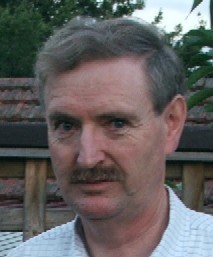 Jeff Byron
Northern Sydney Astronomical Society
Title: Itokawa, YORP
and the Cecil Sayers Observatory
The author's observatory,
intended primarily for photmetric work was completed shortly after the
NACAA2004. At that time, there was a call for photometric observations of the
400m long minor planet 25143 Itokawa to both support the Japanese "Hayabusa"
sample return spacecraft by means of shape modeling and to attempt to verify
the "YORP" effect. This effect predicts that small, irregular shaped
asteroids should have their spin ratessignificantly affected by the
absorption of sunlight and later infrared re-radiation. It could explain, in
part, the distribution of spin rates observed for asteroids. This paper
discuss the challenges of the observations and the results obtained by the
international team.
Barry Clarke
Astronomical Society of Victoria
Title: The Future of Light Pollution
Existing approaches to try to retard the growth of light pollution have generally failed. If nothing is done, cities will typically end up with all-night artificial twilight. If this were only of concern to astronomers, it is unlikely that politicians would act to stop it. The latest research indicates that the problem will affect everyone, however, and this increases the likelihood that governments will have to act to constrain all contributions to outdoor ambient artificial light at night.
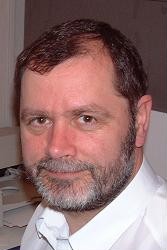 Dr Marc Duldig, Leader, Space and Atmospheric Sciences, Australian Antarctic Division Department of the Environment and Heritage
Title: Icarus: Flying Too High? What Happens to you in a Jet?
Cosmic rays are the source of increased radiation dose received by passengers and crew flying in jet aircraft (and astronauts of course) and the dose depends first on altitude and second on magnetic latitude. Space Weather in the form of solar flare events and geomagnetic storms can also change the dose and in the former case the changes can be quite dramatic. An introduction to cosmic rays and their interaction in the atmosphere is presented leading to a discussion of jet aircraft passenger and crew radiation dose exposure during passenger flights of current and planned aircraft.
David Herald
Canberra Astronomical Society
Title: Asteroid Occultation Results
The predictions of occultation paths has become much more reliable from a combination of the high accuracy star catalogues Hipparcos, Tycho2, and UCAC, together with improvements of orbital elements using the latest data available from the USNO FASTT program and other programs. More than 350 occultations of stars by asteroids have been observed since the first one reported in 1958. More than 80 of these events involved observations from more than one location, allowing for the determination of the size and shape of the asteroid. This paper presents the determination of the size and shape of asteroids from about 80 occultations, as well as details of several double stars detected during occultations.
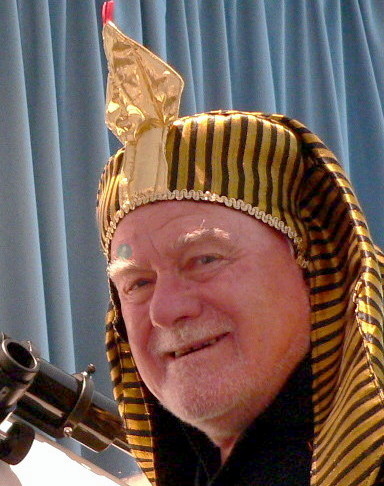 Ray Johnston
Great Barrier Reef Observatory
Title: The Possible Astronomical Alignments of the Great Monuments
of Ancient Egypt
During the Pharoanic era, the Egyptians
constructed a vast array of temples and monuments along the Nile Valley, the
most notable being the Great Pyriamids of Giza. Some researchers suggest that
many of the constructions are aligned not only to the rising and setting Sun
but to specific astronomical objects. The Pyramids do have an incredibly
accurate alignment to the cardinal points of the Earth. More recently, there
have been books and TV programmes relating to the suggested alignment of
shafts within the Great Pyramid with significant stellar objects. All these
possibilities, together with some of the more fanciful "claims" and "discoveries", are examined.
 Peter Lowe
Mornington Peninsula Astronomical Society
Title: Precursor Observations of Nova
Type 1 nova occur as the result of material transference between the components of a close binary star system within which one of the components is a compact object such as a white dwarf or neutron star. If enough material falls onto the compact object, a critical condition can arise leading to a surface nuclear explosion. It is believed that many, if not all nova systems can undergo several nova explosions during the system's lifetime. While the aftermath of nova has been extensive studied, the exact trigger mechanism and necessary conditions leading to a nova are still relatively unknown. Depending upon the trigger conditions it may be possible to monitor how close a nova system is to its next explosion.
Peter Norman
Mornington Peninsula Astronomical Society
Title: Red Giant Stars and the Bethe C-N-O Cycle
In 1938, following Weizacker’s theory of the origin of solar energy, Bethe developed an explanation of the generation of energy and helium in red giant stars which is known as the C-N-O cycle. Bonding models of the light nuclei involved in Bethe’s C-N-O cycle are discussed in terms of the short-range nuclear bonds between adjacent nucleons. These models are based on densely packed alpha particles. The total nuclear bond energy of a nucleus is defined as the empirically measured binding energy corrected for the Coulomb energy of that nucleus.
 Peter Skilton
Mornington Peninsula Astronomical Society
Title: Dynamics of the Cranbourne Meteorite Fall
Australia was the toast of the international scientific community in the mid-1800’s, when the largest known iron meteorite in the world was discovered South East of Melbourne. Weighing 3.5 tonnes, it eventually was named after the nearby small township of Cranbourne. Over the next 150 years, further fragments of iron have been discovered elsewhere in the region, all apparently from the same meteorite fall. To date, twelve meteoritic fragments have been discovered, all commonly known collectively as the “Cranbourne meteorites”, though strictly speaking they are fragments of the one meteoroid, about the size of a motor vehicle, that entered the Earth’s atmosphere.
When sliced, etched and polished they display classic iron meteorite coarse Widmanstatten structure peppered with mineral nodules, however, the meteorite is very prone in air to oxidation and mass loss through flaking [19]. Thus there is an urgency to finding any more components of the meteorite that are yet to be discovered and lie either on the surface or partly or fully buried in the region today.
This paper documents and updates some of the key facts about the fall, and spells out the way forward in modelling the flight trajectory and thence the search for possible missing fragments. This work continues a long term project started by the author in 1990 to understand and model the physical characteristics of the Cranbourne meteorite and the dynamics of its fall, and thereby find further meteoritic fragments for educational and scientific purposes if they exist.
Byron Soulsby
Canberra Astronomical Society and Theodore Lunar Observatory
Title: Lunar Eclipse Crater Timings and Image Analysis
My first attempt at
observing a total lunar eclipse was made in 1972 January 30 with Peter Raw
the then President of the Canberra Astronomical Society.
Since that time
another 50 eclipses have been analysed for crater timings leading to the
evaluation of the oblateness of the Earth’s shadow. Many local and overseas
observers have contributed during the 32 years of the project by providing me
with many crater timings and images. This paper gives the history of the
crater timing and lunar imaging analysis project and the current
findings.
Jeremy Waller
Astronomical Society of South Australia
Title: Telescope Footing for Visual Observations and Polar Alignment - An Engineer's Point of View
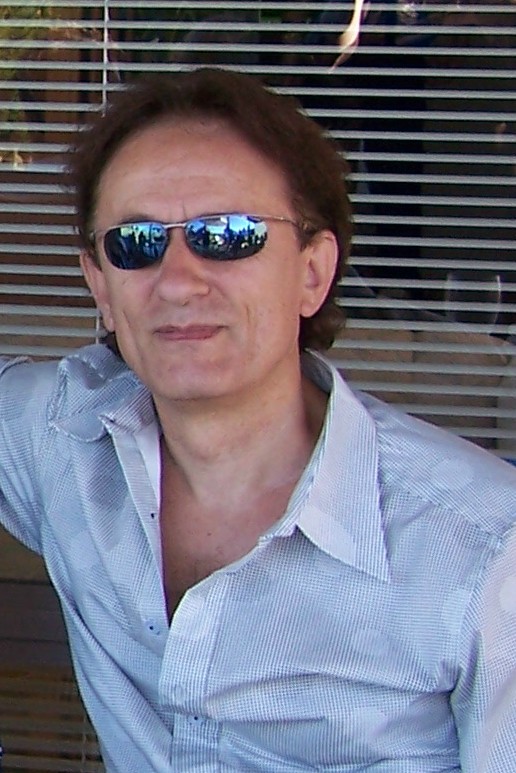 Perry Vlahos
Astronomical Society of Victoria
Title: Astronomical Adventures in the Press and Media
As astronomers, it is in our interest to bring knowledge of the science that has fascinated us, to the attention of the public. Ignoring the opportunities that exist in the press and media is archaic thinking and counterproductive. No matter what we wish to push, astronomically speaking - an event such as NACAA, a new discovery or an astronomical outreach, the key to finding the greatest numbers is always publicity. Whether we like to admit it or not, we must embrace whatever advantages come our way in reaching the masses. Anything less and we are looking in the rear vision mirror, rather than forward to our future goals. But how do we accomplish it?
POSTERS
John Beacom (Ohio State University, USA) -The Importance of Finding Nearby Supernovae
Colin Bembrick (Southern Astronomical Society Inc.) - Amateur Asteroid Research: Current activity and progress in amateur asteroid research in Australia and New Zealand
Jeff Byron (Northern Sydney Astronomical Society) Cometary Photometry - Tempel 1
Barry Clarke (ASV) - The use of Image Intensitiers or The World Best Finder
John Cleverdon (MPAS) - The Development of the Briars Observing Facilities
Ray Johnston (Tropical Stargazers) - Reconstruction & explanation of a 3500 year old bronze disc found in
Central Europe makes this probably the oldest representation of the sky
found to date.
Peter Lowe (MPAS) - The Construction of the Dog House Observatory
Ian Maclean (President, Gove Amateur Astronomers) - N.E Arnhem Land - 40,000 years of Astronomical History: A presentation showing the history of the region from first aboriginal settlement through the Eldo tracking station and its role in the space program of the 60's to the formation and growth of the G.A.A.
Jacquie Milner (ASWA) - THE ASTRONOMICAL SOCIETY OF WA: At the beginning of 2004 the Murdoch Astronomical Society merged with the Astronomical Society of WA. (ASWA). Here is a look at how well the merger went and where ASWA is now and its plans for the future. A TOUR OF FOUR IMPACT STRUCTURES IN WA: In Sept 2004 a tour group of 12 people trekked into the WA desert to visit the newly discovered Yarrabubba impact structure and the Shoemaker impact structure. On the return journey the well known crater at Dalgaranga was visited and there was a brief stop at another new discovery that is still somewhat contested, Yallalie.
Stephen Nugent (Sutherland AS) Astrophotography of Globular Clusters. This presentation details the integration of an SBIG 9XE CCD camera into our facilities in Sutherland in the southern suburbs of Sydney. In choosing deep sky objects to test out the camera and the Celestron 14 inch telescope it would be working with globular clusters were an obvious choice. Photographs and details of globular clusters from each of the 12 classes in the Shapley-Sawyer system will be presented.
Richard Pollard (MPAS) Rebirth of the Anaglyph: Mars in 3D: A PowerPoint presentation of 3D anaglyph images taken by the twin MER (Mars Exploration Rovers) with music from Gustav Holst. 3D glasses supplied.
Jeremy Waller (ASSA) - A practical method to establish accurately the local meridian, for polar alignment of a telescope, and the construction of a platform incorporating a pier and built in compass.